If you have a conservatory, you already know how this week feels. The sun is out, the temperature is climbing, and the room that was supposed to extend your living space has quietly become the hottest, most uncomfortable spot in the house.
You are not imagining it. A conservatory with an older polycarbonate or standard glass roof is not designed to handle heat like this. The glazing lets solar energy in and then traps it. By mid-afternoon on a hot day, it can feel more like a greenhouse than a living room.
The good news is that there are two well-established solutions, and both make a genuine difference.
Solar control glazing: what the figures actually show
Not all glass performs the same, and the difference is more significant than most people realise. The table below compares the solar heat rejection performance of the most common conservatory glazing types.
| Glazing type | Solar heat rejection | Light transmittance | Self-cleaning | Notes |
| Standard double glazing (4mm/12mm air/4mm) | 21% | High (0.82) | No | Common in older conservatories |
| 25mm polycarbonate | 45% | Moderate (0.68) | No | Standard budget option, poor thermal performance |
| Solar control glass: Sunshade Blue (double glazed IGU) | 83% | Lower (0.18) | Yes | High performance solar control with self-cleaning coating |
Source: Pilkington Activ range specification data. Figures shown are for double insulating glass unit construction with Pilkington Optitherm S1 Plus inner pane, 16mm 90% argon filled cavity.
Standard double glazing rejects just 21% of incoming solar heat. Polycarbonate does better at 45%, which is why it became the default for conservatory roofs, but it still lets through more than half the heat on a day like today.
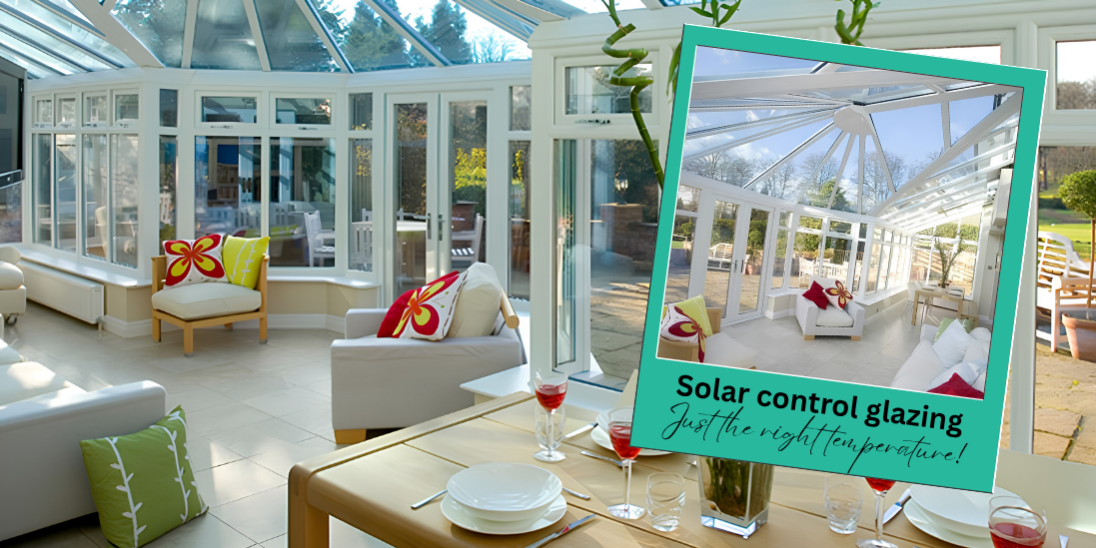
A high performance solar control glass, such as the Pilkington Sunshade Blue option shown above, rejects 83% of solar heat while still transmitting natural light into the room. The self-cleaning coating is a practical bonus: rainwater sheets off the glass rather than leaving streaks, which matters on a roof you cannot easily reach.
We work with Pilkington glass as one of the options in our range. The right specification for your conservatory will depend on the existing frame, the glazing unit construction, and how you use the space. We are happy to advise on what will work best for your situation.
A solid warm roof conversion
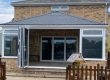
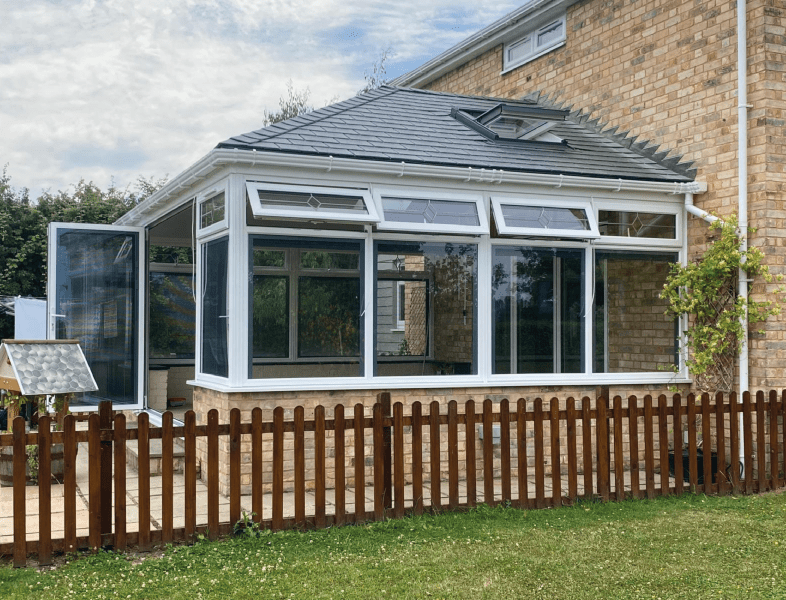
For homeowners who want a more thorough solution, replacing the existing roof with a solid insulated structure is the most effective option. A warm roof conversion removes the polycarbonate or glass entirely and replaces it with a properly insulated tiled roof, bringing the conservatory much closer in feel to the rest of the house.
The difference is significant. Rooms with a solid warm roof stay at a comfortable temperature year-round: cooler in summer, warmer in winter, and much quieter in rain. Many of our customers tell us the conversion turned a room they barely used into one of their favourites.
We are certified installers of the Guardian Warm Roof system and carry out conversions across Essex and Suffolk.
Not sure which is right for you?
It depends on the age and condition of your current roof, your budget, and how much you want to change the look of the conservatory. If the frame is sound and the glazing is the main issue, a glass upgrade can be a cost-effective step. If the structure itself is tired or you want year-round performance, a solid roof is worth considering properly.
We are happy to come and take a look and give you an honest view, with no obligation.
Call us on 01787 477231 or email us today, info@infil.co.uk, to find out more about our conservatory roof options.